In many industrial, commercial, and engineering environments, keeping equipment and infrastructure safe is a continuous responsibility that mustn't be neglected.
Whether you’re operating a pharmaceutical facility, managing a plantroom, or overseeing extensive pipework systems, structural integrity is a non-negotiable requirement. But how do you confirm that equipment is sound, pipework is safe, and welds are reliable without shutting everything down or dismantling half the system?
This is where non-destructive testing (NDT) becomes invaluable. Businesses across the UK rely on NDT to assess the condition of critical assets without causing disruption, damage, or downtime. It is a highly specialised discipline carried out by trained technicians who combine engineering knowledge with advanced detection tools.
At Scope, our NDT support complements our wider offering, including coded welding, pipefitting, mechanical and electrical installations, and specialist engineering services, giving clients confidence that their systems remain safe, compliant, and fully operational.
But for many organisations, the natural starting point is understanding the basics: What is NDT, how does it work, and why does it matter? This guide explains everything you need to know.
Understanding the basics: What is NDT and why is it important?
Before looking at equipment, methods, and procedures, it’s important to answer the fundamental question: What is NDT and why has it become such an essential part of modern engineering?
At its core, non-destructive testing refers to a suite of testing techniques that are used to evaluate a material, component, or structure without causing any damage. Unlike destructive testing, where a sample may need to be broken, cut, or stressed until failure, NDT preserves the item being tested. The entire goal is to examine integrity while the system stays intact.
For industries that depend on continuous production, regulated environments, or high-risk infrastructure, this is crucial. NDT allows operators to detect cracks, weaknesses, leaks, thinning, corrosion, or defects long before they turn into safety hazards or expensive failures.
In sectors like pharmaceutical manufacturing, healthcare engineering, industrial production, and commercial building services, this level of insight is often a legal requirement. Many businesses must be able to demonstrate proactive inspection, documentation, and maintenance as part of their compliance responsibilities. NDT delivers that assurance.
Why non-destructive testing matters for modern businesses
Now that we’ve established what exactly NDT is, the next step is understanding why it’s now considered essential across many sectors. Several factors make NDT an invaluable tool in any safety or maintenance strategy.
It reduces the risk of unexpected failures
Critical failures in pressurised systems, pipework, boilers, or mechanical equipment can lead to serious safety risks, environmental hazards, and disruption. NDT identifies early-stage problems before they escalate.
It supports legal compliance and industry standards
Many facilities must comply with strict inspection requirements. NDT provides documented evidence that assets have been examined by trained professionals using approved techniques.
It extends the lifespan of equipment
Detecting minor weaknesses early means businesses can schedule repairs strategically, avoiding unnecessary replacements or emergency shutdowns.
It prevents costly downtime
A planned intervention is always cheaper and safer than an unplanned breakdown. NDT allows early intervention, minimising disruption.
It improves maintenance planning
By integrating NDT with wider facilities management, businesses gain clearer oversight of asset conditions and can plan long-term maintenance more effectively.
Common types of non-destructive testing
NDT isn’t a single technique, but rather a broad term that covers a range of inspection methods. The choice of method depends on the material, its condition, industry regulations, and the problem being investigated. Here, we’ll explore the most widely used types of NDT:
Visual Inspection (VT)
The simplest yet most widely applied form of testing. Technicians examine surfaces for visible defects, corrosion, deformation, leaks, or damage. Tools such as borescopes may be used for internal inspection.
Ultrasonic Testing (UT)
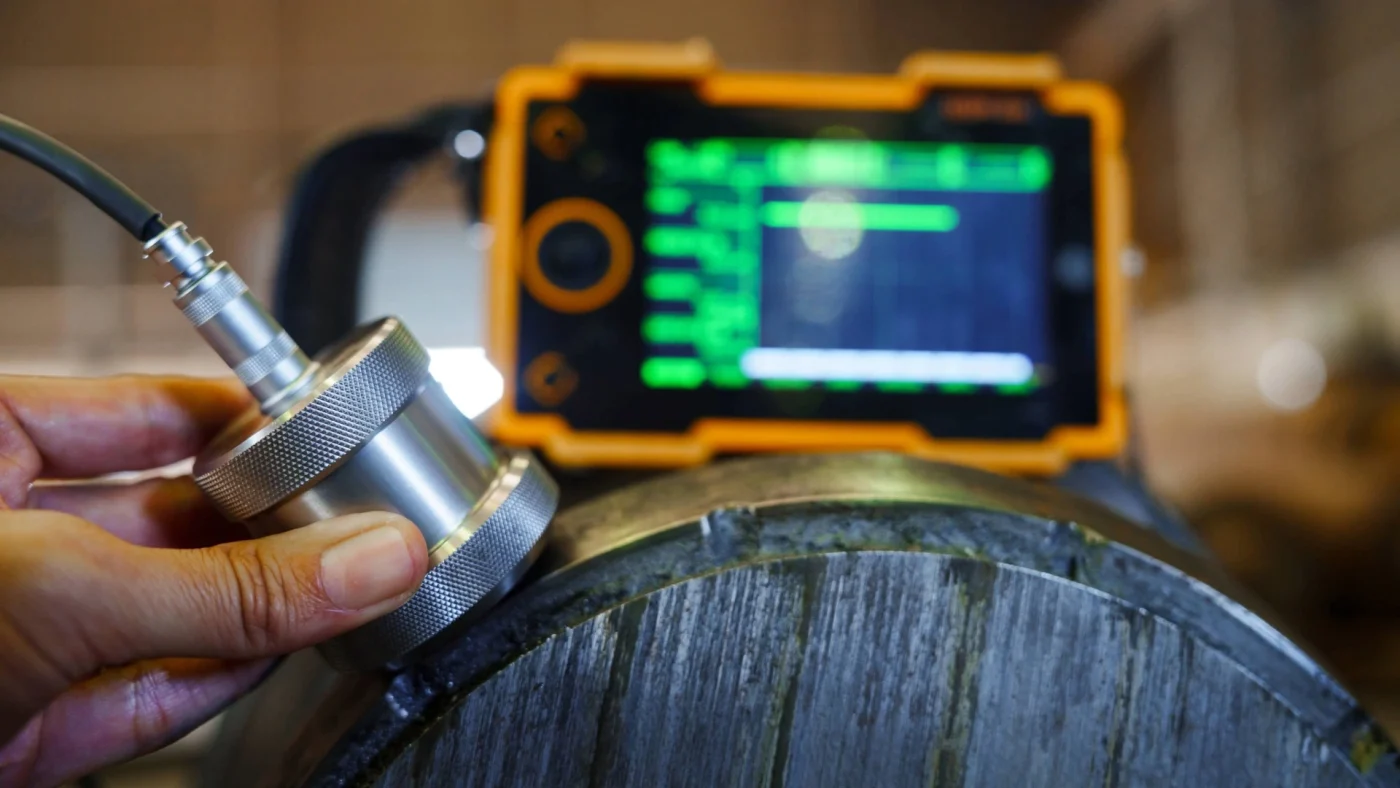
High-frequency sound waves are transmitted into a material. Changes in the wave signal indicate cracks, voids, or inconsistencies. This is especially common for pipework, welds, and pressure systems.
Radiographic Testing (RT)
Using X-rays or gamma rays, technicians can “see” inside a component and identify internal flaws. This is useful in high-risk environments or for evaluating weld quality.
Magnetic Particle Testing (MT)
Used for ferromagnetic materials, this technique highlights surface and near-surface cracks by applying a magnetic field and indicator particles.
Dye Penetrant Testing (PT)
Common for non-porous materials, dye is applied to a surface, drawn into defects, and then made visible under light – excellent for weld inspections.
Eddy Current Testing (ET)
An electromagnetic method that identifies changes in conductivity, perfect for detecting corrosion or surface flaws in conductive materials.
Thermographic Testing
Using infrared imaging to detect temperature variations linked to structural weaknesses.
Across the North East, we carry out NDT support as part of wider mechanical engineering, maintenance, and installation work, particularly where pipework or welding require verification.
How the NDT process works
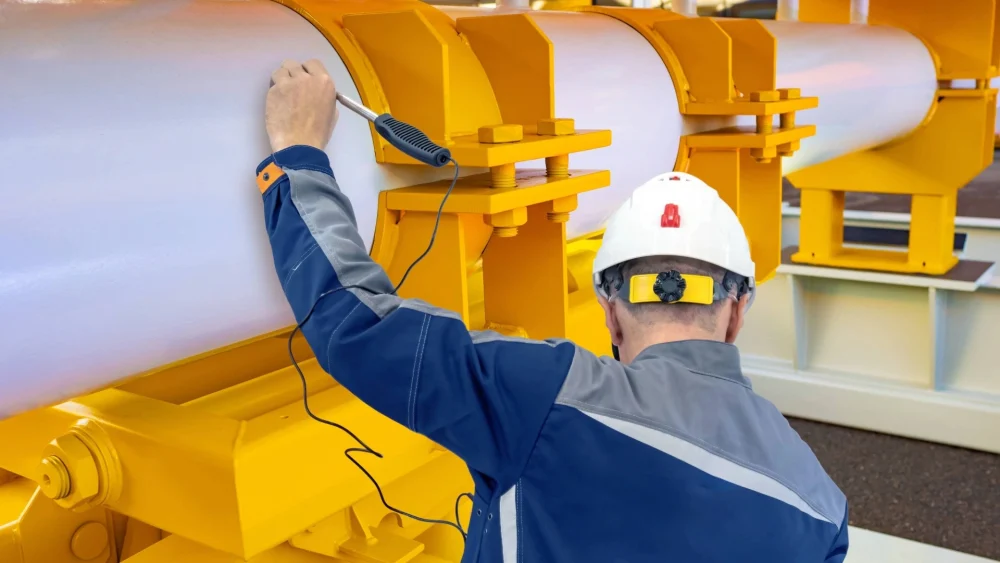
A thorough NDT inspection is systematic, structured, and highly controlled. While processes vary depending on the technique used, most inspections follow the same general stages:
1. Assessment and planning
Before any testing begins, technicians gather information about the system: operating pressures, materials, access points, previous inspection reports, and any known risks. This ensures all testing is correctly targeted.
2. Preparing the equipment and environment
For accurate results, the test area must be clean and accessible. In some cases, insulation may need to be removed before testing – a service we can coordinate alongside our pipework installation, plantroom, and mechanical services teams.
3. Conducting the test
Specialist equipment is used to inspect materials, and technicians collect data in real time. Safety protocols remain active throughout.
4. Analysis and interpretation
Only trained professionals can interpret NDT results. Even small variances in readings may indicate early-stage deterioration that requires action.
5. Reporting and recommendations
Scope provides clear, structured reports outlining findings, risks, and next steps. These documents help facilities managers plan maintenance and demonstrate compliance.
6. Remediation and follow-up testing
If repairs or modifications are needed, our wider engineering team, including coded welders, mechanical specialists, and installation engineers, can carry out the necessary work before retesting.
Where NDT is used: key sectors we support
NDT is not limited to one industry. We deliver testing and inspection support for a wide range of environments across the North East and wider Northern region.
- Pharmaceutical facilities: Precise environmental control is essential in pharmaceutical manufacturing. NDT helps ensure pipework, vessels, and plant infrastructure remain sterile, reliable, and safe.
- Healthcare buildings: Hospitals and clinical facilities require high-integrity systems to protect patients and staff. NDT plays a role in maintaining safety in mechanical rooms, heating systems, and water networks.
- Heavy industry and manufacturing: Corrosion, vibration, high temperatures, and mechanical stress are common in industrial settings. NDT identifies weak points before equipment failure disrupts production.
- Commercial premises: From offices to mixed-use buildings, NDT supports safe operation of mechanical and electrical building services, especially in plantrooms and central systems.
Residential and multi-occupancy buildings: Landlords and property managers use NDT to verify the safety of hot-water systems, communal infrastructure, and pressure vessels.
Why choose Scope Building Services?
With decades of combined experience across industrial, pharmaceutical, commercial, and healthcare environments, Scope Building Services delivers NDT support that integrates seamlessly with our wider engineering capabilities.
Our team understands the real-world demands of maintaining complex systems, from high-pressure pipework to critical plant infrastructure, and we focus on providing clear, actionable insight that enables confident decision-making. Every inspection is carried out with precision, consistency, and a commitment to helping clients meet both operational goals and regulatory requirements.
Whether you’re responsible for industrial production, plantroom operations, or the maintenance of residential or healthcare water systems, our NDT services give you confidence that your infrastructure is safe, compliant, and built for long-term reliability.
If you’d like to discuss how our inspection capabilities can support your operation, get in touch with our team today.